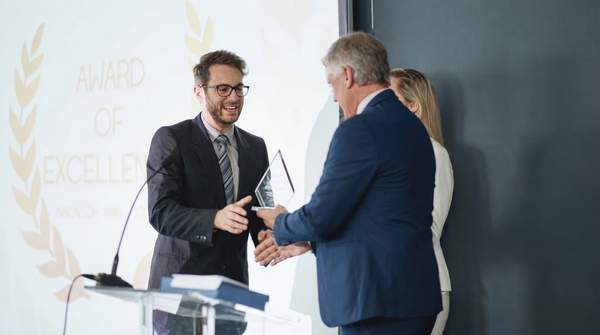
An effective employee recognition program is not a collection of gift cards and plaques—it is a designed system that starts with your company's values, uses a deliberate mix of non-monetary rewards, applies transparent criteria, and is measured against engagement and retention data. The payoff is well documented: Gallup research cited in HR guidance from the University of Scranton reports that employees who feel adequately recognized are five times as likely to be engaged in their work, and a recent study reported by ETHRWorld found employees recognized monthly are nearly four times more likely to want to stay. This guide walks through the four decisions, in order, that turn recognition from an occasional gesture into a working program.
Employee Recognition Program Design Framework
The framework below sequences the key decisions required to build a recognition program from concept to measurement. Each step builds on the previous one: goals defined first shape the reward types you choose, clear criteria keep those rewards credible, and measurement closes the loop by telling you whether the program is working.
| Step | Key Action | Why It Matters |
|---|---|---|
| 1. Define goals and values | Set clear objectives and tie recognition to behaviors that reflect company values | Recognition reinforces the behaviors you want repeated; without alignment it rewards activity, not impact |
| 2. Choose recognition types | Blend public praise, developmental opportunities, time-based rewards, and symbolic awards | A mix of non-monetary options reaches different preferences and roles |
| 3. Establish clear criteria | Publish what qualifies for recognition, with examples of the behaviors being rewarded | Fairness and transparency are empirically linked to engagement and prevent perceived favoritism |
| 4. Measure and adapt | Track satisfaction, participation, and impact on performance and retention | Regular evaluation identifies which behaviors and rewards are actually working |
Step 1: Define Goals and Align with Company Values
Begin by deciding what the program is for. Recognition works as a management tool only when it points at something: the behaviors, contributions, or values the organization wants repeated. Qualtrics illustrates this directly in its own program, which aligns recognition with its "TACOS" core values—Transparent, All-in, Customer obsessed, One team, Scrappy—so that a manager acknowledging someone for solving a problem in an entrepreneurial way might call them "scrappy." The value label gives the praise meaning beyond a generic "good job."
Goal definition also means choosing what to recognize. The University of Scranton's HR guidance notes a shift away from legacy milestones like long-tenure awards toward value-based and impact-focused recognition, reflecting a more mobile workforce—U.S. median employee tenure was 3.9 years as of 2024. Timely, relevant recognition matters more than waiting for anniversaries. When designing an employee-of-the-month style program, Great Place To Work recommends first defining whether the criteria are tied to specific metrics or to behaviors aligned with company values such as teamwork, innovation, or leadership.
Step 2: Choose Diverse Non-Monetary Recognition Types
Once goals are set, select a portfolio of recognition methods. A thoughtful mix of rewards and appreciation yields the greatest impact, and non-monetary recognition can have the same effects on engagement and satisfaction as monetary awards, according to Qualtrics' beginner's guide. The main categories, with examples drawn from the sources:
- Public praise: Verbal praise during meetings, personalized thank-you notes, and shout-outs via company communication channels—including tagging employees and their managers in a Slack channel, or featuring them on company social media, which HR Daily Advisor notes can build pride and loyalty.
- Developmental opportunities: Pairing a recognized employee with a senior leader for a lunch or coffee chat where they can ask questions about their career, as Great Place To Work suggests.
- Time-based rewards: Extra paid time off, whether a mental health recharge day or a surprise day off, which Qualtrics describes as a reliable way to make employees feel appreciated.
- Symbolic awards: Amazon's annual "Just Do It" award publicly recognizes employees who innovate on behalf of customers; recipients get a Nike sneaker trophy that serves as continuing pride for the awardee and motivation for colleagues.
- Shared experiences: Team lunches, cooking classes, or outings like bowling—Hilton gives managers an annual Recognition Calendar with 365 no- and low-cost ideas for thanking employees.
Peer-to-peer recognition deserves special attention in this step. In the study reported by ETHRWorld, employees placed greater value on appreciation from colleagues than from managers: 33% identified a message from a coworker as one that stood out, compared with 23% who cited their direct manager and 17% who said senior leaders. The study reported by ETHRWorld found that the most memorable moments for employees were often rooted in daily interactions, such as helping a teammate or team succeed (25%), offering support during a busy or difficult time (20%), or making an unnoticed everyday contribution (19%). Peer recognition makes contributions visible beyond formal reporting structures, which matters especially where managers lack visibility across locations, departments, and shifts. The report still distinguishes the roles of peers and managers, so peer mechanisms should complement rather than replace managerial recognition.
Step 3: Establish Clear and Fair Criteria
Recognition loses its power the moment employees perceive it as a popularity contest. The defense is transparency: publish what qualifies for recognition and share examples of the behaviors or values being rewarded, as Great Place To Work advises for employee-of-the-month programs. A tech company might, for instance, establish an "Innovator of the Month" award to highlight and reward creative contributions—an example from a large-scale multi-group analysis published in PMC, which found that recognition programs acknowledging employees' efforts boost morale and encourage a culture of innovation.
The same research grounds fairness as more than a nicety. Empirical evidence cited there shows that fairness promotes not only general work satisfaction but also organizational citizenship behaviors—employees going beyond formal job requirements—and that fairness in reward distribution and procedural transparency significantly boost these behaviors by reinforcing a sense of value and respect. Middle managers play a pivotal role here: the analysis recommends transparent communication and equitable resource distribution to enhance team members' sense of fairness. In practice, that means criteria written down before awards are given, applied consistently across teams, and visible to everyone eligible.
Step 4: Measure Program Impact and Adapt
The final step closes the loop. AIHR's guidance on building recognition programs recommends several measurement channels: regular employee satisfaction surveys to gauge satisfaction with the program and its impact on the work experience; assessment of whether recognized employees show improvements in job performance, productivity, and quality of work; and evaluation of feedback quality, since more detailed and meaningful recognition has greater impact. Participation is a leading indicator—one company AIHR profiled achieved 99% monthly participation among people leaders and 93% among individual contributors by tying recognition to company values and tracking activity in real time.
Recognition data itself becomes a management tool. The same AIHR case shows the company using that data to identify, reinforce, and scale the behaviors that drive business performance—recognizing the behaviors you want repeated, and using recognition data to see which ones are having the strongest business impact. AIHR also advises celebrating program successes internally: improved morale and increased retention rates are the outcomes worth marking when the program works.
Building a Culture of Appreciation: Your Next Steps
The decision this framework supports is to implement a structured employee recognition program that prioritizes non-monetary rewards and aligns with company values—defined goals first, a diverse reward mix second, published criteria third, and measurement fourth. The measurable indicator to watch is employee engagement survey scores and retention rates, aiming for sustained improvement, alongside tracking participation in recognition activities. If participation is low or survey scores stagnate after launch, the likely culprits are the criteria in Step 3 or the reward mix in Step 2—both of which can be revised with the next survey cycle. This guide does not address the tax treatment of rewards, recognition software implementation, or monetary compensation design; those require separate expertise.
Sources
- Employees recognised monthly are nearly four times more likely to want to stay, new study finds — ETHRWorld.com
- Employee Recognition Programs: A Beginner's Guide - Qualtrics
- The HR Guide to Launching a Meaningful Employee Recognition Program — The University of Scranton
- Employee Recognition: What It Is, How to Do It Right, and Different Ways To Do It — Great Place To Work®
- Using Social Media to Build a Culture of Recognition: Strategies for Employee Engagement - HR Daily Advisor
- The impact of recognition, fairness, and leadership on employee outcomes: A large-scale multi-group analysis - PMC
- How To Create an Effective Employee Recognition Program (in 2026) — AIHR